
 programmes in fields like IT, cosmetology, and fashion. Here's what these courses offer.)
As India’s skill-development push continues to reshape higher education, Sanskriti University’s School of Vocation and Skill Education (SVSE) represents one institution’s approach to blending academic and practical, job-oriented training. Here’s an overview of what’s covered on vocational.sanskriti.edu.in.
About Sanskriti University
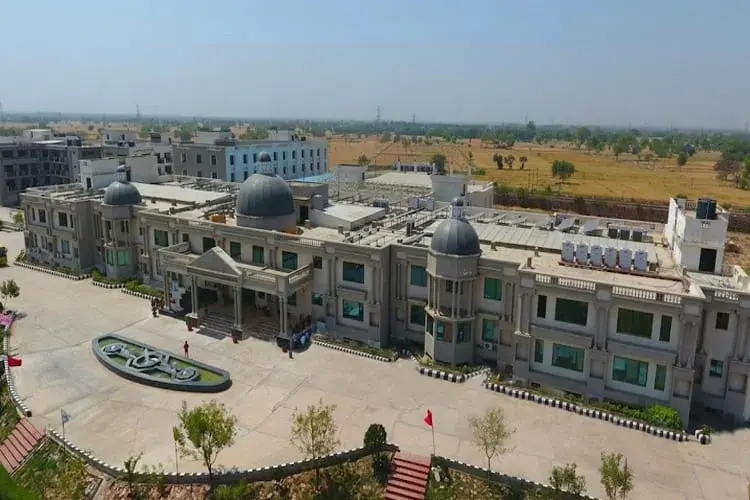
Sanskriti University is a private university established in 2016 in Mathura, Uttar Pradesh, recognized by the UGC and accredited by NAAC. Spread across a 40-acre campus on the Mathura-Delhi Highway, the university offers diploma, undergraduate, postgraduate, and doctoral programmes across a wide range of disciplines, including engineering, management, law, pharmacy, agriculture, medicine, nursing, and education, alongside its dedicated vocational education offerings.
What the B.Voc Programme Is
The Bachelor of Vocation (B.Voc) degree is part of a scheme launched by the University Grants Commission (UGC) focused on skills development integrated into higher education. Structured with multiple exit points under the National Skills Qualification Framework (NSQF) — allowing students to exit with a Diploma or Advanced Diploma at intermediate stages, or complete the full B.Voc degree — the programme is specifically designed to combine practical, industry-relevant skills training with broader general education.
Sanskriti University’s Vocational Course Offerings
At Sanskriti University’s School of Vocation and Skill Education, the B.Voc programme has been offered across several specializations, including Cosmetology, Fashion, IT, and Retail Management. Additionally, the university offers a B.Voc in Medical Laboratory Technology (MLT), a three-year degree (or two-year diploma) programme covering biochemistry, hematology, microbiology, immunology, laboratory safety, quality control, and report writing, aimed at preparing graduates for careers as medical laboratory technicians in the healthcare sector.
Why B.Voc Programmes Exist
The broader rationale behind B.Voc programmes, as articulated by the UGC scheme, centers on addressing India’s significant skill shortage — the country has been identified as facing a skill gap affecting a substantial share of its workforce. By integrating specific vocational job roles and their associated National Occupational Standards (NOS) directly into undergraduate education, B.Voc programmes aim to produce graduates who are simultaneously equipped for immediate employment, capable of entrepreneurship, and prepared to contribute to India’s economy in more specialized ways than a purely general degree might allow.
Eligibility for B.Voc at Sanskriti University
To be eligible for the B.Voc degree programme at Sanskriti University, candidates generally need to have completed 10+2 education from a recognized board with a minimum aggregate of 50%. Beyond this baseline requirement, candidates are also expected to have a genuine interest and aptitude relevant to their chosen vocational field, and some specific vocational courses may carry additional eligibility criteria depending on the nature of the programme — making it worth checking current, course-specific requirements directly with the university before applying.
Fee Structure
Fees for Sanskriti University’s B.Voc programmes vary by specialization, though as a general reference point, the B.Voc degree has been listed at approximately Rs 75,000 annually for a standard three-year duration programme, which is broadly comparable to fees for the university’s other UG diploma and degree offerings.
Facilities Supporting Vocational Training
Sanskriti University’s approach to vocational education emphasizes hands-on, practical learning environments — the university describes its facilities as including specialized labs and workshops designed to mirror real-world work environments relevant to each vocational specialization, an approach intended to ensure students graduate with genuinely applied, industry-ready skills rather than purely theoretical classroom knowledge.
Industry Partnerships and Skill Development Collaborations
Sanskriti University has pursued partnerships aimed at strengthening its skill-development offerings, including a collaboration with the National Skill Development Corporation (NSDC) to jointly administer skill development programmes across disciplines like computer skills, hotel management, sewing skills, and farming skills, reflecting a broader institutional strategy of bridging academic training with industry-recognized skill credentials.
Vertical Mobility for Vocational Students
One notable feature of the NSQF-aligned B.Voc structure is its emphasis on providing vertical mobility for students who complete vocational subjects at the 10+2 level, allowing them a structured, credential-recognized pathway to continue into higher education within the same vocational stream, rather than needing to restart with an entirely unrelated general degree.
Weighing a B.Voc Degree Against a Traditional Degree
Prospective students deciding between a B.Voc programme and a more traditional bachelor’s degree should weigh their own career goals carefully — B.Voc programmes are specifically designed for students who want a faster, more direct path into a specific skilled profession, while traditional degrees may offer broader flexibility for students still exploring which career direction genuinely suits them.
Speaking with current students or recent graduates from a specific vocational stream can also offer a more grounded perspective than promotional material alone.
Final Thoughts
vocational.sanskriti.edu.in represents Sanskriti University’s dedicated push into NSQF-aligned, job-oriented vocational education, spanning fields from IT and fashion to medical laboratory technology. For students specifically seeking a degree pathway that blends practical, industry-relevant skill training with formal higher education credentials, it’s worth reviewing the current course offerings and eligibility details directly on the university’s official website before applying.