
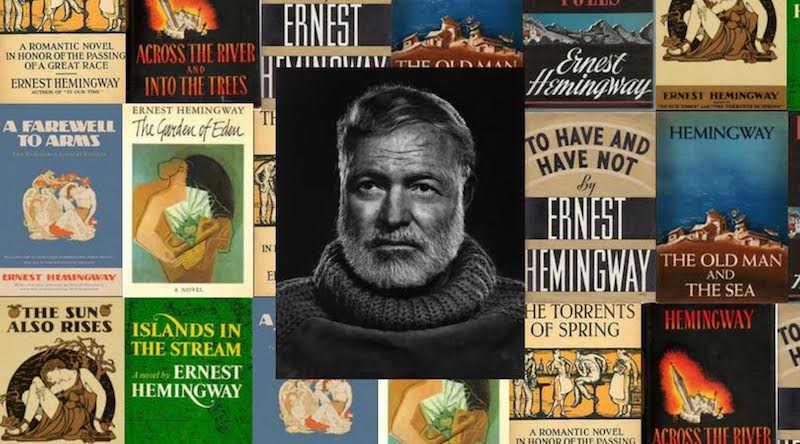

Ernest Hemingway’s Place in American Literature
Ernest Hemingway is widely regarded as one of the most influential American writers of the 20th century, known for his spare, direct prose style that came to be called the ‘Iceberg Theory,’ where much of a story’s meaning lies beneath the surface of simple, understated sentences. His work often explores themes of war, masculinity, loss, and endurance, drawing heavily on his own experiences as a journalist, ambulance driver, and adventurer. He won the Nobel Prize in Literature in 1954, largely on the strength of his body of work.
The Sun Also Rises
Hemingway’s first major novel follows a group of disillusioned American and British expatriates traveling from Paris to Pamplona, Spain, to watch the running of the bulls. The novel became a defining portrait of the so-called Lost Generation, the group of writers and artists disillusioned by the aftermath of World War I, and it established many of the stylistic and thematic elements Hemingway would return to throughout his career.
A Farewell to Arms
Set during World War I, this novel follows an American ambulance driver serving in the Italian army and his love affair with a British nurse amid the chaos of war. Drawing on Hemingway’s own experience being wounded while serving in Italy, the book is considered one of the greatest war novels ever written and remains a staple of high school and college literature curricula across the United States.
For Whom the Bell Tolls
Set during the Spanish Civil War, this novel follows an American demolition expert fighting alongside Spanish guerrilla forces against fascist troops. It is one of Hemingway’s longest and most structurally ambitious novels, exploring themes of duty, sacrifice, and mortality against the backdrop of a brutal and politically complex conflict.
The Old Man and the Sea
Perhaps Hemingway’s most widely read work, this short novel follows an aging Cuban fisherman locked in an extended struggle to catch a giant marlin far out at sea. The book won the Pulitzer Prize in 1953 and played a major role in Hemingway receiving the Nobel Prize the following year. Its simple, allegorical structure makes it one of the most commonly assigned Hemingway titles in American schools.
A Moveable Feast
Published posthumously, this memoir recounts Hemingway’s years as a young writer living in Paris during the 1920s, offering an intimate look at his friendships and rivalries with other literary figures of the era, including F. Scott Fitzgerald and Gertrude Stein. It remains one of the most beloved firsthand accounts of the expatriate literary scene in postwar Paris.
Recommended Reading Order
For readers new to Hemingway, The Old Man and the Sea is often recommended as a starting point due to its short length and accessible style. From there, readers typically move to The Sun Also Rises and A Farewell to Arms to get a fuller sense of his novel-length work, before tackling the longer and more ambitious For Whom the Bell Tolls. A Moveable Feast makes an excellent later read for those wanting insight into Hemingway’s own life and literary community.
Why Hemingway’s Work Still Matters
Hemingway’s minimalist prose style has influenced generations of writers who followed him, and his exploration of war, loss, and personal endurance continues to resonate with readers navigating similar themes today. His books remain a cornerstone of American literary education, both for their historical significance and for the enduring craft of his writing.
Hemingway’s Short Story Collections
Beyond his novels, Hemingway was also a master of the short story form, and collections like In Our Time, Men Without Women, and The Snows of Kilimanjaro and Other Stories showcase his skill at compressing enormous emotional weight into just a few pages. These collections are often assigned alongside his novels in literature courses, since they demonstrate his stylistic techniques in an especially concentrated form, making them useful for readers who want to study his craft in detail.
Understanding Hemingway’s Life and Its Influence on His Work
Hemingway’s own biography, including his service as an ambulance driver in World War I, his years as a journalist covering the Spanish Civil War, and his passion for activities like deep-sea fishing and big-game hunting, directly informed the settings and themes of nearly all his major works. Readers interested in the connection between his life and fiction often pair his novels with biographies or his own memoir, A Moveable Feast, to get a fuller picture of how closely his writing mirrored his lived experience.
Hemingway’s Lasting Legacy in Education
Hemingway’s novels and short stories remain among the most frequently assigned works in American high school and college literature courses, both for their historical significance and because his concise style makes his writing especially useful for teaching close reading and analysis. His clear, restrained sentences offer students an accessible entry point into literary techniques like subtext and understatement, concepts that can be harder to teach through more ornate or descriptive prose styles.