
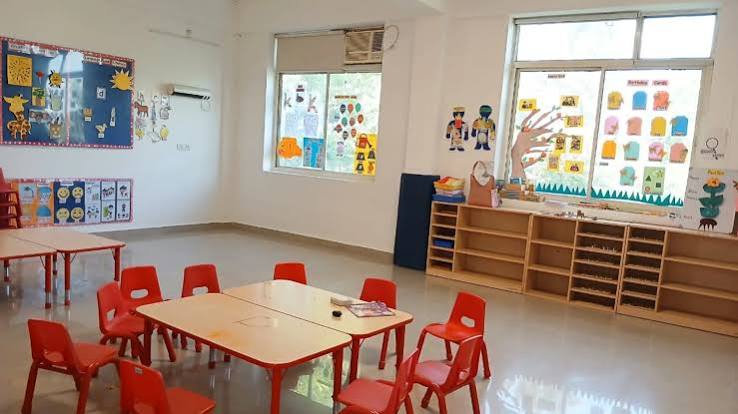

India’s early childhood education sector has grown substantially over the past two decades, driven by rising parental awareness of the importance of quality preschool education and a growing number of entrepreneurs entering the preschool business. Within this ecosystem, specialised suppliers of Montessori materials and preschool setup services, such as Bengaluru-based Kidken Edu Solutions, play an important but often overlooked role — providing the physical materials, curriculum resources, and setup guidance that turn an empty space into a functioning, pedagogically sound preschool.
Kidken Edu Solutions, founded in 2005, has grown into one of India’s most established manufacturers and suppliers of Montessori materials and wooden educational toys, working with thousands of schools across the country and exporting to numerous countries internationally. The company’s core offering centres on Montessori classroom materials crafted to specific pedagogical standards, reflecting the broader Montessori education philosophy’s emphasis on hands-on, self-directed learning through carefully designed physical materials rather than purely lecture-based or worksheet-based instruction.
Understanding why Montessori materials specifically matter requires understanding the underlying educational philosophy they support. Montessori education emphasises that young children learn most effectively through direct, hands-on manipulation of carefully designed materials that isolate specific concepts — a set of graduated cylinders that teaches size discrimination, for instance, or bead materials that build genuine number sense before children work with abstract numerals. This approach requires materials manufactured to precise specifications, since imprecise or poorly designed materials can actually undermine the specific learning objectives they are meant to support.
For entrepreneurs considering entering the preschool business in India, companies offering comprehensive setup services represent a meaningfully different entry point compared to building a preschool from scratch using disparate individual suppliers. A bundled approach — covering curriculum, physical materials, furniture, staff training, and even branding and marketing support — can meaningfully reduce both the complexity and the learning curve involved in launching a new preschool, which is particularly valuable for entrepreneurs entering the education sector without prior background in early childhood pedagogy specifically.
Quality and safety standards deserve particular attention when evaluating any preschool materials supplier, given that these products are used daily by very young children. Materials manufactured from appropriate, child-safe materials, with attention to structural safety, appropriate sizing for small hands, and non-toxic finishes, represent a genuinely important consideration that goes well beyond simple aesthetic or educational value. Suppliers holding relevant quality certifications, and manufacturing according to recognised international standards for Montessori materials specifically, offer parents and preschool operators additional confidence in the safety and pedagogical integrity of what they are purchasing.
The broader preschool supply sector in India has professionalised considerably over the past decade, moving from a fragmented market of small, often inconsistent local suppliers toward more established companies offering standardised, quality-assured products and comprehensive support services. This professionalisation has generally benefited both preschool operators, who gain access to more reliable and consistent materials, and ultimately children, who benefit from better-designed, more genuinely educational materials in their classroom environments.
For existing schools looking to add or upgrade Montessori or early childhood programmes, working with established suppliers offering integrated curriculum and materials packages, rather than sourcing individual components separately from multiple vendors, tends to produce more coherent, pedagogically consistent classroom environments. This integration matters because Montessori education specifically depends on a carefully sequenced progression of materials and activities, and inconsistent or incomplete material sets can undermine the intended educational progression that the overall system is designed to support.
Teacher training represents another significant component of what comprehensive preschool solution providers typically offer, recognising that even excellent materials produce limited educational value without teachers who genuinely understand how to use them according to established Montessori principles. This training component addresses a genuine gap in India’s broader teacher training ecosystem, where formal early childhood education credentials specifically focused on Montessori methodology remain less widely available than general teaching qualifications.
As India’s preschool sector continues expanding, particularly into smaller cities and towns where quality early childhood education options have historically been more limited, specialised suppliers and comprehensive solution providers are likely to play an increasingly significant role in raising the overall quality and consistency of early childhood education available to Indian families, regardless of whether that education is delivered through large, branded preschool chains or smaller, independently operated neighbourhood preschools.
For parents evaluating a preschool independently of who supplies its materials, it is still worth asking what curriculum and materials a school actually uses, since the presence of genuine, well-sourced Montessori or similarly structured materials, used consistently by trained staff, is a reasonable indicator of a school’s overall commitment to a coherent, evidence-informed early learning approach rather than an ad-hoc mix of activities without any clear underlying pedagogical structure.
Prospective preschool entrepreneurs should also treat supplier reputation and after-sales support as genuine due-diligence factors rather than an afterthought, since a preschool’s classroom materials and curriculum resources need ongoing replenishment and occasional replacement over years of operation, and working with an established, reliably reachable supplier considerably reduces the operational disruption that can otherwise arise from dealing with smaller, less consistent, or harder-to-reach vendors once a preschool is already up and running.