

Introduction
Have you ever wondered what actually happens inside a student’s brain while they are learning something new? The concept of the “educational brain,” a topic covered in depth on sites like educationalbrain.com, draws from neuroscience and educational psychology to explain how the brain processes, stores, and retrieves information during the learning process. Understanding this connection between education and brain function can help students, parents, and teachers adopt more effective learning strategies. In this article, we explore what the educational brain concept means and how it can be applied to improve learning outcomes.
What Is the Educational Brain Concept?
The educational brain refers to the growing field of research, often called educational neuroscience or “brain-based learning,” that studies how the human brain learns, remembers, and processes information. This field combines insights from neuroscience, psychology, and education to understand which teaching methods align best with how the brain naturally functions, rather than relying purely on traditional, one-size-fits-all instructional approaches.
How the Brain Processes Learning
When a student learns something new, several regions of the brain work together. The prefrontal cortex is involved in focus and decision-making, the hippocampus plays a central role in forming new memories, and various sensory areas process information coming in through sight, sound, and touch. Repetition, meaningful context, and emotional engagement all influence how strongly information is encoded into long-term memory, which is why simply reading a textbook passage once is often far less effective than actively engaging with the material.
Key Principles of Brain-Based Learning
- Active Learning Beats Passive Learning: Research consistently shows that students retain information better when they actively engage with material — through discussion, problem-solving, or teaching others — rather than passively listening or reading.
- Spaced Repetition Improves Memory: Reviewing information at increasing intervals over time, rather than cramming, strengthens long-term memory retention significantly more effectively.
- Emotional Connection Enhances Retention: Information tied to emotional relevance or personal interest tends to be remembered more easily, which is why storytelling and real-world examples are powerful teaching tools.
- Sleep and Rest Are Critical for Learning: The brain consolidates memories during sleep, meaning adequate rest is just as important to learning as study time itself.
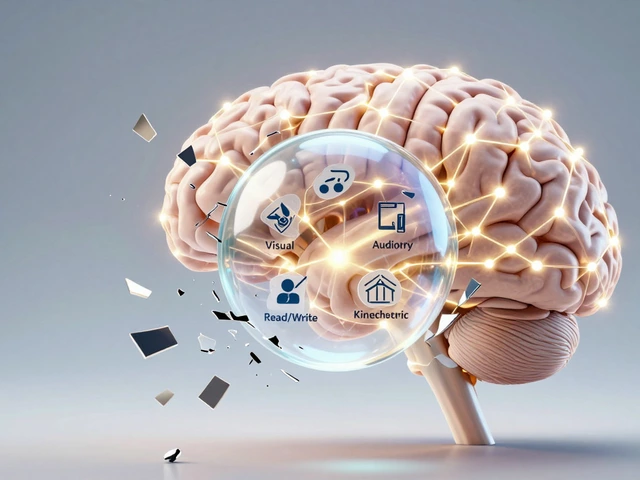
- Multi-Sensory Learning Aids Understanding: Combining visual, auditory, and hands-on learning experiences helps reinforce understanding compared to relying on a single mode of instruction.
Why Understanding the Educational Brain Matters for Students
For students, understanding how their brain learns can lead to more effective study habits, such as breaking study sessions into shorter, focused intervals rather than long, exhausting sessions, using active recall techniques like self-quizzing instead of simply re-reading notes, and prioritising sleep and breaks as part of an effective study routine rather than sacrificing them for extra study time.
Implications for Teachers and Parents
Teachers who understand brain-based learning principles can design lessons that align better with how students naturally absorb information, incorporating variety, interactivity, and real-world relevance into their teaching. Parents, too, can support their children’s learning by encouraging balanced routines that include adequate sleep, breaks, and varied learning activities rather than pushing for long hours of passive study alone.
Common Myths About the Brain and Learning
It is worth noting that some popular ideas about the brain and learning are not well supported by science. For example, the idea that people are strictly “left-brained” or “right-brained” learners, or that we only use 10% of our brains, have both been widely debunked by neuroscientists. Focusing on evidence-based strategies like active recall, spaced repetition, and multi-sensory engagement is far more effective than relying on these popular but inaccurate myths.
Conclusion
The concept of the educational brain highlights just how closely learning and brain function are connected. By applying evidence-based, brain-friendly learning strategies, students can improve how effectively they absorb and retain information, while teachers and parents can better support the learning process. As research in educational neuroscience continues to grow, it is likely to shape even more effective teaching and study methods in the years ahead — a space worth following through resources like educationalbrain.com.